Measuring nothing
Why the hardest thing to prove is the thing that didn’t happen
Written by Rosie Tran
Sometimes the better you do your job, the less visible you are.
If the flood doesn’t cut off any roads, if the young person doesn’t end up sleeping rough, if the fire doesn’t reach the town, that’s the win. It just doesn’t look like one.
“It’s a political and cultural challenge,” I shared with Liza. “And until we treat it that way, we’ll keep under-valuing some of the things that matter most.”
Liza, an emergency management specialist who has worked across local, state and federal government, sees the same tension. National policy has long called for greater investment in resilience, mitigation and preparedness. But emergency management is also operating in an environment of increasingly frequent and severe disasters, where response capability remains absolutely essential.
“Absolutely, we want a strong response capability,” Liza says. “We want ‘the system’ to be ready with reliable equipment that uses up to date science and innovation and can be deployed in a timely way. But at the same time, we also want communities to be well prepared, infrastructure to be reliable and industry to be well-informed.”
The challenge is not response or prevention. It is building systems that can do both well.
Prevention infrastructure is invisible
After the 2019-20 bushfires, I worked on Victoria’s recovery effort, specifically on community-led recovery. The work focused on rebuilding trust, restoring social cohesion and helping communities feel heard. It was important work, but also incredibly difficult to measure.
“With the restoring trust and social cohesion aspect of the work, those things don’t necessarily show up in a spreadsheet,” I reflected. “The impacts might not show up until the next big disaster.”
Liza saw the same dynamic from the emergency management side. Communities were often being asked to report progress using frameworks that didn’t reflect how recovery was actually experienced on the ground.
“It’s really complex for communities to indicate how they are doing according to the measures required by a central government department,” she says.
Response infrastructure is visible: aircraft, fire trucks, helicopters. Prevention infrastructure is harder to see. It is governance reviews, planning frameworks, social capacity and community relationships, and long-term capability building. It’s invisible if nothing happens.
The system rewards what it can see
Liza points out that many post-disaster reviews and Royal Commissions tend to focus on operational response: what decisions were made, when they were made and whether agencies acted quickly enough.
“The way the system is judged following an emergency really impacts how funds are prioritised,” she says.
That does not mean response investment is misplaced, it saves lives. But it does mean longer-term prevention activities can struggle to compete for sustained attention and funding.
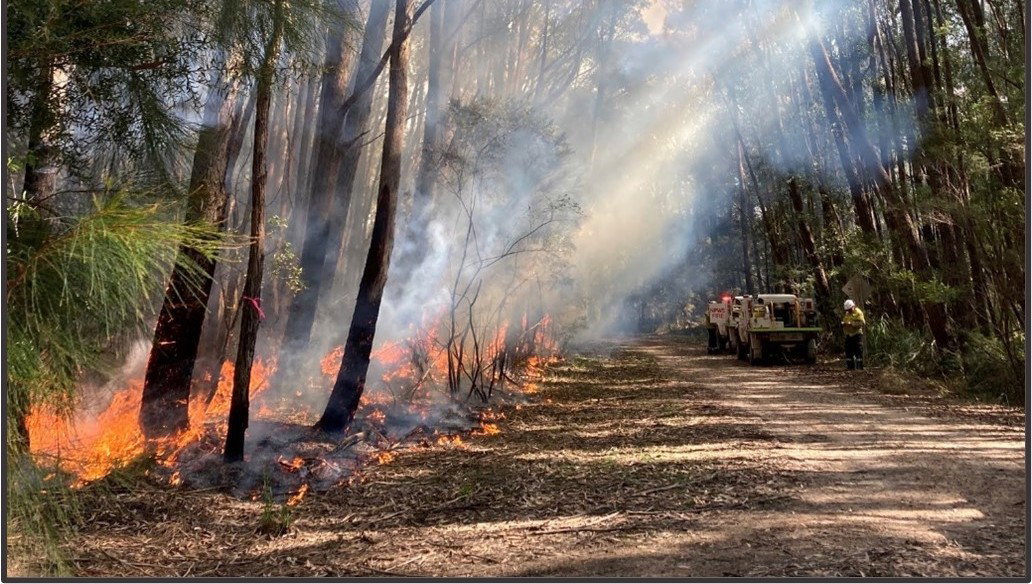
Prescribed burning is one example. In principle, jurisdictions may agree it is a priority. In practice, implementation is often constrained by funding, workforce capacity and competing pressures.
I have seen similar patterns in homelessness and youth services. During periods of budget pressure, prevention and social building programs are often the first to quietly wind down. The impacts of those cuts may not become visible for years. The lag time in the consequences makes political will much harder to sustain.
Stories matter too
For both of us, the issue is not a lack of evidence. It is that many of the most meaningful impacts emerge slowly and outside standard reporting periods.
I believe storytelling and lived experience are critical parts of evaluation.
Stories can be dismissed as “soft evidence” in systems that prioritise dashboards and return-on-investment metrics.
To bridge that gap, I often link qualitative evidence back to a theory of change or program logic. You need to take the audience with you.
The deeper challenge is cultural rather than methodological. Emergency management operates in an environment of uncertainty, incomplete data and constantly changing conditions. Yet organisations are often still expected to prove causality with precision.
“We should normalise uncertainty,” I emphasised to Liza, “and reinforce the narrative that uncertainty is part of context and we need to be adaptable to manage for it.”
Measuring nothing is a capability
“Measuring nothing” is actually about measuring contribution, preparedness, trust, capability and risk reduction – things that are real, but harder to count.
I believe learning to sit with that complexity is a sign of organisational maturity. “If we keep insisting on measuring only what’s measurable, we’ll keep investing in the wrong things,” she says.
Liza agrees. The goal is not to shift attention away from response, but to build a more balanced system: one that values preparedness, capability and long-term resilience alongside frontline response.
Measuring nothing is not really about measuring nothing at all.
It is about recognising and valuing the things that make disasters less severe, communities more resilient, and systems better prepared – long before their impact becomes visible.
Photo credit: NSW National Parks and Wildlife Service prescribed burn
Prescribed burning is one example of prevention activity whose impact is often difficult to measure, despite its contribution to long-term risk reduction.